![[identity profile]](https://www.dreamwidth.org/img/silk/identity/openid.png) nfe-gremlin.livejournal.com posting in
nfe-gremlin.livejournal.com posting in ![[community profile]](https://www.dreamwidth.org/img/silk/identity/community.png) narniaexchange
narniaexchangeTitle: Passing Seasons
Author:![[livejournal.com profile]](https://www.dreamwidth.org/img/external/lj-userinfo.gif) nasimwrites
nasimwrites
Recipient:jn208505
Rating: T
Content/Warnings: Violence, some dark themes.
Summary: “Here was once a land of joy and plenty, once torn apart by the Long Winter and now twice torn apart by those who dare call themselves saviors of Narnia.” Summer brings new challenges for the Pevensies.
Author’s Notes: Thank you, Janet, for being my beta even though it was on short notice!
This story was originally meant to be less than 16 pages in length, but it mutated and grew and is now over 100 pages in length and has nearly 60,000 words… I hope you don’t mind reading a novel-length fic!
Passing Seasons
Chapter 8
“And you are sure that this cave is the same as theirs?”
The Morkin brothers looked at each other and then looked back at Edmund, nodding rather nervously.
“I think so,” said the eldest. “It’s deep enough to reach that depth. It would only take a few hours to discover… if we’re remembering correctly it should intersect with the other perfectly. We think we’ve been into that cave before.”
Edmund raised an eyebrow. “And you did not mention this days ago because…?”
Roc and Noc looked at each other and then at the ground, looking rather awkward. It was Roc who finally spoke. “We went exploring in those caves when we were children, and our mother had forbidden us to do so… we haven’t spoken of it since and we weren’t quite sure…”
“And you are sure that they do not know of this cave?”
“Yes,” said Noc. “It’s hidden in a way that makes it look like it’s just a crevice in the wall. It’s rather high off the ground but the jump is possible.”
“And it will prove invaluable in a battle,” Borik put in, looking at Edmund, who nodded and then put his hands together in front of him, touching his fingertips as he immersed himself in his thoughts.
Finally he spoke, some minutes later. “We ought to send a group in to explore first, but we do not have that time, if our friends are as predictable as I think they are.” He inhaled sharply and straightened up, his eyes clear and determined. “Roc and Noc, you will lead me and a third of our company to the caves. Gather the supplies you need and we shall leave in half an hour.”
“Half an hour? Your Majesty!” The Morkins were shocked. “It’s too dangerous! There is a waterfall… it will be dusk soon and by the time we reach the caves all will be in complete darkness!”
“We have no choice,” said Edmund. “Though not very skillful, they still outnumber us. If my suspicions are correct and we do not do this tonight, we might not stand much of a chance.”
The Red Dwarves’ eyes widened and they soon ran off to find the things they needed. Borik met Edmund’s gaze.
“Are you going to ask me if I am sure about this?” Edmund said wryly.
The Dwarf grinned. “Nay, Sire. I agree with you completely. I was merely wondering what you want me to do.”
Night fell over the forest and the camp was surrounded by the noise of insect life. Above the trees, the moon had retreated behind a heavy curtain of clouds, making the night all the darker. Tents had been set up between the hollows in the rocky hill, and the only lights visible were one or two candles now and then, though these eventually were turned off as all went to sleep. At the bottom of the hill, the horses and ponies rested quietly, occasionally moving to reach a new patch of grass.
Hours passed, and it was well after midnight that any unusual noises were heard. The camp was completely quiet, except for the occasional sound of quiet breathing from those who slept within, and the crickets chirped in an almost subdued way, hidden among the bushes. In the almost complete darkness of the night, broken only by an occasional firefly or the glimmering of some stars between the leaves of the trees, a silent army advanced, guided only by the shining eyes of a panther that slinked in the dark before it.
The horses shifted uncomfortably as they felt unknown presences around them, and one of the ponies made a low noise as it recognized the smell that had brought it pain some days before. But neither sound nor movement could be heard within the tents, and no one saw or heard the silent footsteps of their attackers as they climbed the rocky hill, their movements careful and calculated as they positioned themselves before the tents, bright swords already drawn and arrows on the string as they prepared to strike their enemy. The most skillful of the group were before the tent at the center, which was most likely the King’s.
Then, all at once, they struck, pulling the tents open and charging with weapons at the ready. But they were met with empty beds and only three soldiers with their weapons ready and armor on, while on the outside, the rest of the small army from Cair Paravel had climbed the hill behind them and now had them surrounded.
Meanwhile, Edmund was giving slow, careful steps as he walked over the narrow, slippery rock floor. They were on a narrow ledge on the side of the mountain, nearly twelve feet from the ground, which led into the small entrance of a cave behind the raging, icy cold waterfall that fell down the side of the mountain. Edmund tried not to shiver as the spray hit his face, somehow feeling as if it had managed to permeate his armor. Behind him came a Satyr who did not look very happy about the situation, his hooves nearly slipping off the edge with every step he gave, and in front of him went Witrow, his ears flat against his head as he withstood the onslaught of spray, the thought of slipping the least of his worries. In front of them all were Roc and Noc, who had taken along with them two large packs as well as the necessary weapons and armor that Borik had provided.
Edmund breathed a sigh of pure relief as he finally entered the damp cave, reaching out to pull the rather frightened satyr inside. Roc and Noc had pulled out two lanterns, which they handed to the satyr and a Faun, and then pulled out what seemed like an eternal length of thin rope.
They tied it to an old hook by the entrance. “We put it there ourselves, years ago,” said Noc proudly, as he tested it. “This way we make sure we won’t get lost.”
“I sincerely hope we do not,” said Edmund, not entirely amused. It had been years since the Morkins had been to this place, and though they seemed rather confident about being able to find the way into the rebels’ cave, any number of things could have happened to the passages in the past few years, and they weren’t entirely sure if it intersected with that cave or if they had simply remembered wrong. Either way, they had no choice, so Edmund followed the brothers silently as they finally decided on which way to go and began to walk, pulling the rope alongside them so as to leave a trail that would lead them back to the entrance if it was needed.
“Let us hope this does lead to the right place, or we will have to go through the water again,” Witrow growled. “This cave smells rotten.”
Roc hushed him sharply, hissing that noise is louder in caves and might carry to the other cave. Edmund could tell that the leopard was holding back a snide remark, and held back a smile. There was something oddly amusing about the feline’s haughty personality.
They walked for what felt like hours, though the dwarves assured them it was only an effect of the caves and that little over forty minutes had passed, though Edmund did not know how they could possibly be sure of that. The heavy mountain above their heads felt as if it was breathing down their necks and weighing down on their shoulders, and Edmund often found himself having to actively think of something different in order to escape the pressing feeling of claustrophobia as the walls of the cave became narrower and narrower.
Roc and Noc, on the other hand, seemed to be getting happier the deeper they went. Edmund hoped it meant that they had realized that they were right about the passage and that it did indeed lead into the rebels’, but he was not entirely sure and he did not feel like asking. However, when Roc and Noc turned to smile gleefully at him, he had to ask.
“Oh, yes,” said Roc, nodding earnestly. “Two more turns and we should be able to hear them.”
Edmund let out the air he hadn’t realized he had been holding in. He nodded and pulled out his sword, a movement that was rather inhibited by the narrowness of the passage and therefore had to be done with much more care, and motioned for everyone else to do so as well. “Not a word from now on,” he said. “Does it get any wider later on?”
“Yes, Sire,” said Noc. “Very soon.”
“Good. I will need to move ahead of you, and then we will listen and wait. On my signal we rush in.”
The next few minutes were tense ones. Edmund wished he could look at the sky to know what time it was and know how long they were likely to wait. Part of him feared that they might be too late, or worse, that all the effort had been for nothing and that they were not really in the right cave, or that he had severely miscalculated and Teucer had not decided to attack their camp that night.
But these worries soon vanished as the corridor widened and they began to feel clearer air moving in from in front of them. Edmund moved ahead in the line, and the dwarves put out the lanterns, leaving the rope, which was close to running out, on the ground. Their movements were extremely cautious; the mere sliding of gravel could be loud enough to alert the entire cave of their presence.
Then they heard noises, and Edmund was filled with a deep feeling of gratitude. The dwarves had been right; it most certainly was Teucer’s cave. Carefully holding his sword, he moved to sit down near where the corridor stopped and ran out into the wall of the larger cave, some feet higher than the floor. They must be deeper in the mountain, because there was only a slight flicker of light from distant torches, which Edmund was grateful for. They could not afford to be trapped inside the corridor or just outside it; they needed to be able to enter the cave entirely.
He went ahead of the others and crouched near the entrance, judging by the flickering firelight the length of the cave, and discovering an important piece of information: the cave was shaped like an L, with the longest part being where the entrance from the exterior was. Their corridor penetrated the very middle of the shortest side, which was slightly curved and full of columns and crevices which easily hid the hole. He could hear the low murmur of voices and the occasional crack of wood or the movement of a chair. The flickering shadows on the walls helped him know what number of people was in the cave.
They had not left yet, but it was obvious that they would. Edmund could see the outlines of weapons in their hands and people being dressed in old, heavy armor. He had been right. Now all they had to do was wait.
Their moment came nearly three hours later after what felt like the most agonizing wait of their lives.
Most of the Knights of Stone had left, and Edmund had heard Teucer’s voice echoing throughout the cave, which made everything that was happening quite clear despite the fact that they were rather far. Things were going according to plan, and Edmund could almost taste victory when Teucer, followed by Nirthic and another Dwarf.
A few moments later, he gestured to the others.
Slowly, they stood up, grasping their weapons. Witrow, a satyr and the two Morkins quickly jumped down into the cave and moved towards the front of the cave, where they were to attack the guards, quickly followed by Edmund, a Faun and a Red Dwarf, who ran towards the end of the cave.
Teucer and his people barely had time to react, but when they reached them Teucer was already holding a sword at the ready, his wide eyes murderous. Beside him, Nirthic had seized a knife, while the other old Dwarf crouched behind the centaur.
Edmund ran to Teucer, their swords clashing loudly the very second they heard a pained cry from the Minotaur at the entrance of the cave. Edmund struck fiercely, delivering blow after blow. Beside him, the Faun was fighting Nirthic, who had proved himself quite skilled with the knife, while the Dwarf moved towards the one that hid behind Teucer. But the centaur rose up and delivered a kick at the Red Dwarf, who fell backwards, the wind knocked out of him, even as Edmund struck at Teucer’s leg, causing it to bleed profusely.
The centaur screamed with rage, his leg crumpling beneath him, but he dragged himself forward with his other three legs, his sword coming down upon Edmund over and over again in a mad flurry of movement. Edmund found himself having to duck and jump sideways to avoid being beheaded. Still, he was suddenly seized with a strange uneasiness; he did not want to kill Narnians, and he definitely did not want to kill a centaur. Teucer might have gone insane with grief and hatred, but he had once been a magnificent creature. Despite all the destruction and pain that Teucer had created, Edmund could not bring himself to truly attempt to stab him in the heart.
That did not mean, however, that he would not disarm him. The Dwarf Teucer had kicked rose and distracted the centaur, giving Edmund opportunity to push him back towards a pile of empty crates. The centaur crashed against them and tripped, his already wounded leg crumpling beneath him once more, his age weighing him down as he fell, his sword slipping from his fingers. The Faun pressed Nirthic against the wall at that very moment, and Edmund seized the centaur’s sword, holding them both pointed towards him.
“Surrender,” said Edmund coldly. “And I will not kill you.”
Teucer laughed a grotesque, mad laugh. “I do not want your pity, traitor.”
And reaching sideways, he pulled the knife from Nirthic’s hand and pulled the Dwarf to him, pressing a knife against his own accomplice. “We will not bow before false Kings.” And he slit the Dwarf’s throat before any of them could do anything, and then slit his own.
Their bodies crumpled to the ground and Edmund and his men had no choice but stand there and watch as they gave their dying coughs, blood spilling from their lips. Behind them, the cowering Dwarf was quickly apprehended by Witrow, the Morkins and the satyr. Roc had a grimace of pain on his face; he seemed to have broken a rib.
Edmund stared at the dead centaur that lay in the pool of blood, an inexplicable feeling in his stomach. He then took a deep breath and looked at the others, no joy or triumph in his expression.
“Well, then,” he said.
//
They joined Borik and the others in the forest, bringing three tied-up dwarves on their horses, which they had left, tied up relatively near to the cave before leaving. The Minotaur had refused to surrender. The rocky hill now held nearly fifteen captives kneeling in a circle, carefully watched over by a boar and another leopard.
“The fighting just finished,” said Borik, wiping the sweat off his forehead with a dirty rag. “But we seem to have lost seven of them… they stole some of the horses and are heading East.”
Wordlessly, Edmund turned his horse and left in that direction, followed by five others. They went as fast as the forest would allow them, brushing past tree trunks and ducking branches. Edmund gripped the reins tightly, his jaw clenched with worry. They could not afford to let seven criminals free without at the very least standing trial; the rebellion ran the risk of repeating itself if the culprits were not caught and did not suffer the consequences for their actions. But they had had a head start; they must have left early on in the battle, if Borik had only just noticed it and had not acted immediately. He cursed mentally, urging his horse to go faster.
They reached the edge of the wood and galloped towards the road. The sun was already rising ahead of them, and the cold morning wind whipped at their face almost painfully. Edmund kept his eyes trained on any sign of a cloud of dust ahead as they advanced down the winding road. Perhaps they had already gone too far to be caught; Edmund shuddered to imagine the expressions on the villagers’ faces when they realized that he and his people had allowed seven of the people responsible for the destruction and raiding of their village escape them. Though they had cut off the head of the rebellion, any remaining pieces of it that went unpunished could still be dangerous to Narnia.
Troubled as he was with these thoughts, it took Edmund a moment to process what was happening in front of him when he turned a corner and found himself at the crossroads of Pebble.
The seven remaining Knights of Stone seemed to have just gotten there as well, and were reining the horses sharply, trying to turn away from the barrier that had been lifted blocking the way East. Three of them were Talking Beasts, and were trying to climb or fly over it, but they were immediately hit with rocks or wooden clubs from the other side of the barrier.
The minute they turned to escape and saw Edmund and his people riding towards them, they dropped their weapons and surrendered. The gate of the barrier opened and Susan stood there, armed with her bow and quiver of arrows, and surrounded by villagers wielding homemade weapons.
“Hello Sister,” said Edmund rather breathlessly as they tied up the criminals with some help from the villagers.
Susan smiled.
//
My Brother:
You will be pleased to hear that Edmund returned to us yesterday morning, bringing with him a great number of Knights of Stone who surrendered. I am sure that he has informed you of their accomplishments, so I shall not waste time explaining them.
The people of Pebble have taken matters into their own hands, and they have done so with much proficiency and prudence. A village council has been formed, with five members of different families elected by the villagers; their role from this moment on shall be to ensure that the village is secure, and send for aid if necessary, as well as make certain that all families are provided with the means to survive during the winter. This is, we believe, a most appropriate solution to the insecurity at the borders of the country; it ensures that the villages remain independent and resourceful, yet do not have to fend for themselves in the event of a serious threat. Perhaps we should consider implementing this system to villages in other parts of Narnia.
A trial was held for those responsible of the cruel acts carried out by the Knights of Stone. Many of those who surrendered were young village families that had not had much contact with the others during the Long Winter, and had retreated towards the mountains during the Winter Revolution, fearful of what was to come. It was there that Lord Teucer drove them to rebellion. These people, who have now repented, were sentenced to a month of service to the village, in which they will help in agriculture and any repairs that may be deemed necessary. The others, who were not so full of regret and truly did believe in the rebel cause, have been sentenced to exile from the Western Fields, and shall be publicly denounced as criminals against the State; this, we hope, shall stop any attempt at reviving the Knights of Stone movement.
I believe that a great thing has been accomplished, not only in defeating the rebels or implementing a new system in the village, but also in raising the morale of the people. Pebble has lived in fear for too long, and therefore their development has been severely stunted; but now I see a village of people determined to carry on and rebuild what was destroyed. Pebble’s growth shall not stop here; I trust that with the new vision that the council has, in little time it shall once more be the center of Western trade, and a beacon of light to the rest of Narnia.
We depart within two days, so we shall be arriving at the Cair near the end of the week. It grieves me that we will have missed great part of the Summer Festival, but what has been achieved in Pebble makes me feel that I would not have had it any other way. I am looking forward to being reunited with you and our Sister, as well as the rest of our friends. Tell King Lune that he may look forward to tasting his mead once more!
Your good sister,
Susan.
The tide was low, and the Kings, Queens, Princes and Lords had gone to the beach beside Cair Paravel that morning to find a low tent with an arrangement of cushions, chairs and tables, which were soon to be laden with food for dinner. While they were gone from the camp, the Narnians were already beginning to move barrels and crates back into the palace, in preparation for the final banquet that would take place the following night. King Lune and Prince Jarrash took a walk by the shore and were only visible as small dark figures against the bright white sand, and King Reghorius and Queen Amisse were sharing a small dish of pistachios as they sat on a pile of cushions. Cadoc, meanwhile, had begun a game of chess with Peter.
“I am not sure if I want to play against you,” Peter said with a grin. “Peridan has told me that he lost to you within five minutes.”
Cadoc smiled rather bashfully. “It was longer,” he said, as he set the pieces in place. “But I doubt I could beat the High King of Narnia at chess.”
Peter chuckled. “You already won the chess tournament, so I would not be surprised.”
The Prince said nothing, but smiled as he leaned back in his seat and waited for Peter to make the first move of the game. He looked different than he had looked when he had first arrived; though still the tall, lanky, and rather clumsy boy, he seemed to have developed a new sense of confidence, which had showed in his fierce determination during sparring matches, and also during his expertly played chess matches. Even King Reghorius seemed to have noticed the difference: though he did not address his son often, when he did so it seemed to be with less of a reprimanding tone.
Lucy sat at the edge of one of the carpets facing the sea, her legs extended before her, her bare toes buried in the sand. She breathed in the salty scent of the wind and fingered a small seashell she had found near the water earlier; it was a beautiful pearly white on the outside, yet a light pink on the inside. She would later take it to adorn her room.
“It is a strangely enchanting place,” said a low voice near her. She turned and found herself staring at Ishamiel Tarkaan, who stood some feet away from her, barefoot as well, his white tunic flowing in the wind as he stared in the opposite direction, towards the grass and the trees.
“Yes, it is,” Lucy said with a smile.
Ishamiel turned to look at her, looking almost surprised that someone was there. He held her gaze for a moment, and then his dark eyes turned back towards the horizon. She stood up slowly and joined his side, looking very small beside his tall figure.
“The tales did not do Narnia justice,” said the Tarkaan, his expression strangely soulful. A small smile appeared on his lips. “I came with Prince Jarrash merely because I was the only who would brave this land with him. My people have long feared the tales of animals that speak, men with the bodies of beasts, and trees that speak and walk about as humans do.”
“It can be a shock,” said Lucy with some amusement.
Ishamiel nodded. “The poets have said that man finds beauty in mysteries, and love in what he deems impossible. Narnia is a wild, savage land; its green hills and living forests seem to hide living and breathing magic. And I have discovered that the saying is true… Narnia has an irresistible spell that charms a man and changes him.” A small smile appeared on his lips. “Calormen is like this also. Or at least, it is to those who seek the true Calormen.” He turned to look at her. “Perhaps you may see it someday, Queen Lucy, and savor its enchantment.”
“I would love to,” she said sincerely. “It sounds beautiful.”
“She is,” said Ishamiel. “But she has changed. The wonders that were once valued highly are now buried underneath fire and stone and the sins of selfish emperors bowing to false idols. Calormen lies hidden under the weight of years of forgetfulness. She is not as she used to be. It grieves me to see my country in this state. But Narnia is new and young, unmarred.”
“Not as unmarred as we wish,” Lucy said sadly. “The Long Winter has hurt Narnia badly. But by the will of Aslan, our people are recovering, and we shall restore Narnia to her previous splendor.”
Ishamiel smiled. “There are many tales of your Lion Prophet, told as horror stories, in our lands. But I cannot bring myself to believe that the creature they have spoken of could create such beauty in this land.” He sighed. “There is much fear in Calormen, and I believe we may have inspired the same in other countries, for the people of Calormen speak the name of Tash as if He were a demon, they twist His words into devious plots to instill fright and weakness in our hearts.”
Lucy said nothing as they stood in the sun. His eyes stared at something beyond the land in front of him. Finally, he spoke again. “But I do not believe we are all that different,” he said, turning to look at her. “Tash was once a Prophet, before men began to forget his Truth. Tash inspired the Great Ardeeb Tisroc, who molded Calormen into a land of splendor and great beauty and riches, her science and arts the most advanced in the world. Tash taught of the search for Truth, and the love for beauty. His word united our tribes and so the Empire was born.”
“Aslan speaks of love and sacrifice,” said Lucy softly. “I never did believe that a country could be built on the words of demons.”
“He was not so in the past,” said Ishamiel, and his voice grew quiet, softer. When he spoke, he nearly did so in a whisper, as if he spoke solely to himself. “I have never felt the Truth of Tash as strongly as I do now, as I sit on the grass and watch your Fauns dance, as I speak to birds and wild woodland creatures, as I watch the dryads offer fruit to their Kings and Queens. It permeates everything, it flows in the water and in the wind, it grows within the very earth; your Aslan whispers the words of my Tash in my ear, and suddenly… suddenly I seem to feel truly alive.”
They said nothing for some time, standing together in silence, their faces now turned towards the East. In the distance King Lune and Prince Jarrash returned, just as Cadoc beat Peter at chess, causing much amusement.
“I must go to Calormen someday,” said Lucy presently. “So that I may learn from the true Tash as well.”
“You would enjoy it, I believe,” said Ishamiel with a smile. “The true temple of Tash is a library, not a home of statues and ceremonies. And my daughters would welcome you and be the best of friends. We would show you the true Calormen: a country of gardens, poetry and incense, sand, spices and beauty.” He looked away. “Perhaps when Jarrash is Tisroc. He is a good man; you may be invited to the Coronation.”
But Lucy’s heart sank with his words. She knew that not even Ishamiel himself believed his own words, and she heard Dorick’s voice in her mind. Jarrash would never wear the crown. Calormen would never be ruled by him.
//
Susan and Willow shared a smile as the monkey passed her, carefully handing drinks to all those present. She held back the urge to pull the monkey’s small figure into a hug; there was something distinctly baby-like about her, even though she knew Willow was already a teenager by monkey standards.
Beside her, Edmund sat comfortably on a chair, quietly watching those who shared conversations all around him. They would leave the following morning, and the village council had called a meeting with those who had come from Cair Paravel. They had only just finished supper on the long tables that had been joined in the garden of the Morkins’ house, and Susan suspected that soon there would be a speech.
The village council had been formed by a rapid election. Most of the village’s decisions had been instant; the five who would represent them were people who had already demonstrated great ability and moral strength, and so it was simple to choose Hana Morkin, Ash the monkey, Clover the hare, the eldest of the Birdel brothers, and one of the dryads from the forest close by.
The eldest of the Birdel brothers rose in his seat and hit his goblet against the table to call everyone’s attention. All faces turned to him.
“On behalf of Pebble’s new village council,” he began slowly, his gruff voice ringing loudly in the clearing. “I wish ter give a heartfelt thank you to Their Majesties the brave King Edmund, and the loving Queen Susan, as well as all those who came with them and have now become friends of this village and of its people. Without yer help, we would still be livin’ in fear and we may not have survived the year. Yer courage and guidance have inspired us. Pebble’s gates are always open, and we hope ter look upon yer faces again.” He bowed deeply in all directions, and there was much applause.
As the dwarf sat down, Susan stood up, a smile on her lips. “I am sure that my Royal Brother agrees with me when I say this: these victories are yours and yours only. Our objective in coming was to aid a village in need: we would not have been able to do so had it not been for your guidance and support, and your willingness to open your homes to us. It is we who have been truly inspired. Here we have made friends and learned so much about your ways and your lives, and these are things that we shall cherish forever. Though we may leave tomorrow, our hearts are always with you, and know that if you ever require our help again, you must only ask. Thank you.”
There was hearty applause, and Susan sat down once more. She could not help but feel that she had not managed to explain her feelings completely, that there had been words missing from her speech to describe how the past few days had changed her. As she looked around at the smiling faces of those whom she had helped, and who had unknowingly helped her on an entirely different level, she felt such a rise of emotion in her heart that she saw tears cloud her vision. Though she was keen to return to Cair Paravel, a great part of her yearned to stay there forever, with the people who had taught her the true meaning of strength and purpose.
Some hours later, after the last of the tables were cleared and put away, Susan found Hana standing on the porch of her house, her back towards her.
“Shall we go in?” Susan asked gently. The men had already retreated to the stable for the night, and the villagers were long gone.
Hana shook her head slightly in a gesture that looked so distant that Susan quickly walked up to her, joining her side. Even as she opened her mouth to inquire what was wrong, the dwarf woman spoke, her tone softer than Susan had ever heard it.
“I see it now,” she said, leaning slightly against one of the columns. She seemed both younger and older at once. “Everything, so clearly.”
Susan said nothing, but the confusion was evident on her face.
“All these years,” said Hana. “These years of pain and suffering, and such heartbreaking loss… they have made me into what I am. I have been hit by countless hammers, but they’ve made the metal in my veins strong.
“I don’t know if this winter will last forever or not,” she continued. “But it is not my lot in life to know what is to come. No; my place has always been and forever will be in this house, in this village, in this part of Narnia, and my life has been and always will be a story of survival. I will not let it be any less. These seasons I will enjoy, and cherish in my heart always, and thank the Lion that my four sons lived to see Spring, Summer and Autumn again, and that perhaps they may see them for the rest of their lives.” Hana met Susan’s gaze, and there were tears glistening in her eyes. “And when Winter comes, I will not be afraid. I will survive it, as I have survived the seasons before it.”
Susan did not realize she was crying until she felt the tears sliding down her cheeks. Neither she nor Hana said anything as they stood on the porch, but her mind was rushing with thoughts that filled her with both joy and grief at once. She felt both England and Narnia as beating hearts within her; twin words, twin realities, but in her soul they were one. It was not her lot in life to know what was to come, either, but her place would always be where Aslan bid her to go. And her life, like Hana’s, would become a story of survival. On the porch of the Morkins’ home, in the small village of Pebble, in the distant Western Fields, Susan Pevensie swore to herself that she would survive.
“My worlds are passing seasons,” she murmured to herself, as tears ran down her cheeks. “And only Aslan knows how long each shall last, or if I shall ever return to the other. But I cannot live in fear of what is to come. My purpose is not to know, it is to find reason within faith.”
//
The camp was slowly being dismantled, leaving nothing but the tents that the delegations from other countries would require to sleep that night. The Pevensies were to return to the palace that night, since the Summer Festival would have officially ended, and the next morning would be spent at the harbor, saying farewell to Galma and Calormen as they left Narnia. Archenland would follow suit shortly afterwards.
As the camp was dismantled, the Great Hall of Cair Paravel was already being decorated for the closing banquet that would be held within the next five hours or so. Large amounts of food were being prepared in the kitchens, and people ran back and forth checking that everything was in place. Peter went to oversee the preparations and then, pleased with the way the Hall was looking, directed his footsteps towards his study, where some pressing matters awaited him before he could retire to prepare himself for that night’s festivities.
Susan and Edmund would be arriving at sundown, a gryphon had informed him. They would have exactly enough time to prepare themselves for the banquet.
As he walked down a corridor on his way to the study, he stopped a passing faun. “Have you seen Queen Lucy?”
“She is in the Southern gardens, Sire.”
“I should have known,” said Peter, and thanking the faun, made his way to the nearest balcony he could see that looked over the south side of the palace gardens. He could use some help redacting a letter to the King of Terebinthia; it was generally Susan, or in her absence, Edmund, who would help him in matters such as this one, but Lucy’s readiness to assist anywhere she was needed told him that she would not mind him asking her for help.
He neared the sunny balcony and set his hands on the warm stone wall, looking down. Beneath him, a large garden extended from the walls of the palace to the inner wall of Cair Paravel which served to isolate the citadel. There were large beds of flowers, bushes laden with fruit, beautiful trees, and even tiny streams that ran from one end of the garden to the other, with strikingly carved bridges leading over it.
It was on one of these bridges that Peter saw Lucy’s small figure sitting, her legs folded underneath her as she peered through the rails down into the water, her hand outstretched as she tried to reach it. Giving up, she stood and skipped down to its banks, where she began to carefully set small dry leaves onto the water and watch them as they floated past her like small boats. The sun shone in her hair, giving it a reddish tone, and suddenly Peter was fully conscious of how small she looked.
Lucy had said she had left childhood behind her in England, but though Peter knew that this was true, he also knew that Lucy had not given up the part of her that was a child yet. Lucy could spend days administrating complex events and helping him set treaties with neighboring countries, but there would come a time when she needed to go down to the gardens and simply play as the child that she still was. Lucy knew that she needed balance.
Peter smiled as he watched his little sister reach into the water, trying to catch tadpoles with fierce determination. The letter to Terebinthia could wait.
The doors of Cair Paravel opened wide at sundown to welcome in all those that had participated in the Summer Festival and lead them to the Great Hall, where the banners of each country had been raised, and the tables had been laden with food. The Grey Fauns had begun to play a soft melody, and even as all were seated and drinks began to be passed around, Peter and Lucy got word that Susan and Edmund had arrived.
Lucy beamed. She was now wearing a formal gown and a circlet upon her head, just as Peter was wearing an elegant tunic and cloak and his crown. He smiled back at her, and at that precise moment, Prince Jarrash made his way to their table, sitting on one of the empty chairs.
“I am aware that this seat has been reserved for another,” said the Prince. “But I merely wished to congratulate you, High King; word has come to my ears of your Royal Brother’s success. Your swift action and effective methods have convinced me once more of Narnia’s strength and valor. The Tisroc (may he live forever!) shall be pleased to hear of this.”
Peter smiled. “It is an honor to be so well thought of, Prince Jarrash,” he said. “Just as it has been an honor to have had you join us during these days of celebration. It is our fervent hope that our alliance has been further strengthened by this event.”
“It most certainly has been,” said Jarrash with an elegant nod of his head. His smile was sincere. “I shall speak to the Tisroc (may he live forever!) immediately upon my return. Perhaps then we may discuss the subject of trade between our countries.”
They shared a firm shake of hands, and then the Prince left, leaving the seat empty just as the wide doors opened and Susan and Edmund, followed by Borik, Witrow, and all those who had gone with them to the West, entered the Great Hall following a herald who announced them. Peter watched as his sister and brother made their way to their table, and suddenly was seized with great pride at the sight of his brother and sister looking more grown up than he had ever seen them, a triumphant, though tired, air about them as they walked, their eyes and smiles speaking of victory.
All applauded as they went to sit beside their brother and sister. Before the large audience, they could not exchange words as of yet, but they exchanged glances and smiles, even as Peter stood up, extending his arms in a welcoming gesture.
“Welcome, friends of Narnia, to the final banquet, which shall conclude these days of festivity that we have all enjoyed,” he said, his voice ringing throughout the Hall. “Narnia has been greatly honored by all of your presences, and we will remember these days for years to come as the days in which unbreakable bonds of friendship have been made and our victories have been celebrated.” He turned towards Edmund and Susan. “I also wish to welcome my Royal Brother King Edmund, and my Royal Sister Queen Susan, as they have returned from their duties in the West, where they were occupied with ensuring that peace may never be stolen from the Narnian people.”
Applause rang throughout the Hall once more, and Peter smiled, raising his goblet of wine. “So let us drink to the prosperity of Archenland, Calormen, Galma and Narnia. May these days of joy be only the beginning of an era of splendor and glory for all our countries.”
All raised their glass, and Susan could not help but laugh as she saw King Lune cheerfully open his bottle of Archenland mead, raising his goblet to her, his eyes twinkling.
Dancing soon began, to the soft sound of what reminded Peter of an English Waltz. Susan and Lucy were quickly asked to the dance floor as the Princes and Kings left their tables, and Peter left his seat to join conversation with the King of Galma, who was looking unusually thoughtful as he drank his wine, standing near his table, with some Galman Lords on either side. His eyes fixed on Peter as he approached, and he gave Peter what almost looked like a smile, moving a few steps towards him.
“I hear Narnia has no ships of her own,” said King Reghorius, in a tone that held no derision.
“Sadly, it is true,” said Peter. “There has been some thought of having one or two built, for there is a pressing need, given that they are necessary in order to visit our allies, such as Galma. It is, however, rather complicated, given that there are no Narnians with the necessary knowledge.”
King Reghorius smiled. “Perhaps Galma could offer assistance, then, High King. I know a few men with great skill who might be fit for such a project.”
Peter’s smile was of true delight. “That would be very generous of you,” he said. “Thank you.”
“Perhaps my son may visit often as well,” said the King, rather gruffly, though there was no anger in his gaze. “Narnia seems to do him good.”
“We would be pleased to have him,” said Peter. “He shows much promise.”
Reghorius looked rather doubtful, and sighed. “I do hope so, High King. I hope so.”
Lucy ended her dance with Prince Cadoc and made her way to the table to have something to eat, just as two large baskets were brought forth by some servants, containing pears, which none at the feast other than the Pevensies seemed to have tried before, except for the occasional Talking Bird. As the music stopped momentarily, Susan declared their name and explained their discovery to all those near her, encouraging them to try the new fruit, which was soon met with much admiration and delight.
“So she discovered the pear?” Lucy asked Edmund in bewilderment. He was still seated at the large table, finishing his dinner. “I hadn’t even realized pears were not eaten in Narnia.”
Edmund grinned. “Neither did I, but it is so entertaining to watch them try it for the first time.”
They laughed together, and she moved to the chair beside him, her cheeks rather flushed from all the dancing. They shared a look. “How have you been?” he asked.
Lucy smiled at him. “I have been well,” she said. “But you are the one with all the adventures to tell.”
“I do, but that may wait until later, when you and Peter interrogate us for details before bed,” said Edmund with a small smirk. As they spoke, he reached into his pocket and took out a small bundle, which he handed to a faun. In the nearest table, they could hear King Lune cheerfully speaking of the names that he and his wife in Anvard were considering for his twin sons. Edmund remained where he was, but presently Lucy left him to return to the dancing.
Meanwhile, Peter was approached by a faun and handed a small package as he spoke to King Reghorius and Lord Claeys. He glanced up towards where Edmund sat and gave him an inquisitive look. His brother responded with a small shrug and an amused smirk. Peter held his gaze for a moment, feeling puzzled, before turning back to the bundle in his hand. He excused himself from those around him and moved towards another corner of the room, near the dancers. He then unwrapped it and discovered a rock resting in the middle of his palm. He turned to Edmund, his eyebrows raised.
“I told you I would bring you a rock,” said Edmund, a grin on his face as he joined him some minutes later.
Peter tried to hold back a smile of amusement and failed. They laughed together, and he slipped the rock into his pocket with a shake of his head.
“What happened to your face?” he asked Edmund as he noticed the small cuts near his brother’s forehead.
“A particularly angry raven,” said Edmund dryly. “I think he was trying to tear my face off.”
“It could have been worse, then,” said Peter, an amused smile still on his lips. His brother snorted and they turned to look at the dancers as they turned and glided over the marble floor.
He could see Lucy, dancing with Ishamiel Tarkaan seeming deeply immersed in her conversation with the older man. She did not look like the young girl she was, but rather like a Queen and a wise woman, graceful and intelligent as she moved smoothly over the floor. Lucy, his youngest sister, and yet at times the eldest of them all. It was all so much clearer to him now. Lucy understood Narnia; she loved it, breathed it, grew with it. She displayed its age and experience just as much as its youth and fairness, and in her the balance of traits had created an enchanting, knowledgeable soul.
Susan sat near King Lune, smiling and laughing at the King’s jokes, her eyes shining as he told stories of Anvard and spoke of his children. There was something different about her, Peter could tell. She seemed more alive, more focused to the world around her, as if she had let go of something and now she was free. Her hands were worn and rough from the work she had done in the village, but there was a softness to her gaze, a fierce, blazing light of affection for everyone and everything around her in her eyes.
And Edmund stood beside him, looking more like a grown man than Peter ever remembered him looking. There was no trace left of the young, snide boy who had come to Narnia. Edmund was a King and a Knight, his eyes taking in the view before him with quiet detachment. He was a strong man with the quiet determination to redeem himself before Narnia.
Even as he looked at the three of them he felt their gazes on him, and saw both Susan and Lucy excuse themselves from their conversations, making their way towards him and Edmund. Outside, the sun had set and the stars shone brightly in the sky, reflected against the large, dark expanse of the sea. As Peter glanced at it through one of the large open windows, he remembered his dream, and for a moment it seemed as if the moonlight made the horizon gleam a golden color, and he could almost see a bright land shining beyond the waters.
Part 1
Part 2
Part 3
Part 4
Part 5
Part 6
Part 7
~~~~
Original Prompt that we sent you:
What I want: I love the Golden Age. Something set while the Pevensies are ruling! I enjoy a bit of drama and the relationship between the siblings! Would love something from Edmund's POV, either 1st or 3rd person is fine!
Prompt words/objects/quotes/whatever:
http://i292.photobucket.com/albums/mm5/laura_1004/narniabannercopy.png
http://www.famousquotesabout.com/quoteImage/313/siblings-quotes.jpg
http://www.polyvore.com/cgi/img-thing?.out=jpg&size=l&tid=9141710
http://25.media.tumblr.com/tumblr_m3rn5mFsUm1r9d1g3o1_500.png
Author:
nasimwritesRecipient:
jn208505Rating: T
Content/Warnings: Violence, some dark themes.
Summary: “Here was once a land of joy and plenty, once torn apart by the Long Winter and now twice torn apart by those who dare call themselves saviors of Narnia.” Summer brings new challenges for the Pevensies.
Author’s Notes: Thank you, Janet, for being my beta even though it was on short notice!
This story was originally meant to be less than 16 pages in length, but it mutated and grew and is now over 100 pages in length and has nearly 60,000 words… I hope you don’t mind reading a novel-length fic!
Chapter 8
“And you are sure that this cave is the same as theirs?”
The Morkin brothers looked at each other and then looked back at Edmund, nodding rather nervously.
“I think so,” said the eldest. “It’s deep enough to reach that depth. It would only take a few hours to discover… if we’re remembering correctly it should intersect with the other perfectly. We think we’ve been into that cave before.”
Edmund raised an eyebrow. “And you did not mention this days ago because…?”
Roc and Noc looked at each other and then at the ground, looking rather awkward. It was Roc who finally spoke. “We went exploring in those caves when we were children, and our mother had forbidden us to do so… we haven’t spoken of it since and we weren’t quite sure…”
“And you are sure that they do not know of this cave?”
“Yes,” said Noc. “It’s hidden in a way that makes it look like it’s just a crevice in the wall. It’s rather high off the ground but the jump is possible.”
“And it will prove invaluable in a battle,” Borik put in, looking at Edmund, who nodded and then put his hands together in front of him, touching his fingertips as he immersed himself in his thoughts.
Finally he spoke, some minutes later. “We ought to send a group in to explore first, but we do not have that time, if our friends are as predictable as I think they are.” He inhaled sharply and straightened up, his eyes clear and determined. “Roc and Noc, you will lead me and a third of our company to the caves. Gather the supplies you need and we shall leave in half an hour.”
“Half an hour? Your Majesty!” The Morkins were shocked. “It’s too dangerous! There is a waterfall… it will be dusk soon and by the time we reach the caves all will be in complete darkness!”
“We have no choice,” said Edmund. “Though not very skillful, they still outnumber us. If my suspicions are correct and we do not do this tonight, we might not stand much of a chance.”
The Red Dwarves’ eyes widened and they soon ran off to find the things they needed. Borik met Edmund’s gaze.
“Are you going to ask me if I am sure about this?” Edmund said wryly.
The Dwarf grinned. “Nay, Sire. I agree with you completely. I was merely wondering what you want me to do.”
Night fell over the forest and the camp was surrounded by the noise of insect life. Above the trees, the moon had retreated behind a heavy curtain of clouds, making the night all the darker. Tents had been set up between the hollows in the rocky hill, and the only lights visible were one or two candles now and then, though these eventually were turned off as all went to sleep. At the bottom of the hill, the horses and ponies rested quietly, occasionally moving to reach a new patch of grass.
Hours passed, and it was well after midnight that any unusual noises were heard. The camp was completely quiet, except for the occasional sound of quiet breathing from those who slept within, and the crickets chirped in an almost subdued way, hidden among the bushes. In the almost complete darkness of the night, broken only by an occasional firefly or the glimmering of some stars between the leaves of the trees, a silent army advanced, guided only by the shining eyes of a panther that slinked in the dark before it.
The horses shifted uncomfortably as they felt unknown presences around them, and one of the ponies made a low noise as it recognized the smell that had brought it pain some days before. But neither sound nor movement could be heard within the tents, and no one saw or heard the silent footsteps of their attackers as they climbed the rocky hill, their movements careful and calculated as they positioned themselves before the tents, bright swords already drawn and arrows on the string as they prepared to strike their enemy. The most skillful of the group were before the tent at the center, which was most likely the King’s.
Then, all at once, they struck, pulling the tents open and charging with weapons at the ready. But they were met with empty beds and only three soldiers with their weapons ready and armor on, while on the outside, the rest of the small army from Cair Paravel had climbed the hill behind them and now had them surrounded.
Meanwhile, Edmund was giving slow, careful steps as he walked over the narrow, slippery rock floor. They were on a narrow ledge on the side of the mountain, nearly twelve feet from the ground, which led into the small entrance of a cave behind the raging, icy cold waterfall that fell down the side of the mountain. Edmund tried not to shiver as the spray hit his face, somehow feeling as if it had managed to permeate his armor. Behind him came a Satyr who did not look very happy about the situation, his hooves nearly slipping off the edge with every step he gave, and in front of him went Witrow, his ears flat against his head as he withstood the onslaught of spray, the thought of slipping the least of his worries. In front of them all were Roc and Noc, who had taken along with them two large packs as well as the necessary weapons and armor that Borik had provided.
Edmund breathed a sigh of pure relief as he finally entered the damp cave, reaching out to pull the rather frightened satyr inside. Roc and Noc had pulled out two lanterns, which they handed to the satyr and a Faun, and then pulled out what seemed like an eternal length of thin rope.
They tied it to an old hook by the entrance. “We put it there ourselves, years ago,” said Noc proudly, as he tested it. “This way we make sure we won’t get lost.”
“I sincerely hope we do not,” said Edmund, not entirely amused. It had been years since the Morkins had been to this place, and though they seemed rather confident about being able to find the way into the rebels’ cave, any number of things could have happened to the passages in the past few years, and they weren’t entirely sure if it intersected with that cave or if they had simply remembered wrong. Either way, they had no choice, so Edmund followed the brothers silently as they finally decided on which way to go and began to walk, pulling the rope alongside them so as to leave a trail that would lead them back to the entrance if it was needed.
“Let us hope this does lead to the right place, or we will have to go through the water again,” Witrow growled. “This cave smells rotten.”
Roc hushed him sharply, hissing that noise is louder in caves and might carry to the other cave. Edmund could tell that the leopard was holding back a snide remark, and held back a smile. There was something oddly amusing about the feline’s haughty personality.
They walked for what felt like hours, though the dwarves assured them it was only an effect of the caves and that little over forty minutes had passed, though Edmund did not know how they could possibly be sure of that. The heavy mountain above their heads felt as if it was breathing down their necks and weighing down on their shoulders, and Edmund often found himself having to actively think of something different in order to escape the pressing feeling of claustrophobia as the walls of the cave became narrower and narrower.
Roc and Noc, on the other hand, seemed to be getting happier the deeper they went. Edmund hoped it meant that they had realized that they were right about the passage and that it did indeed lead into the rebels’, but he was not entirely sure and he did not feel like asking. However, when Roc and Noc turned to smile gleefully at him, he had to ask.
“Oh, yes,” said Roc, nodding earnestly. “Two more turns and we should be able to hear them.”
Edmund let out the air he hadn’t realized he had been holding in. He nodded and pulled out his sword, a movement that was rather inhibited by the narrowness of the passage and therefore had to be done with much more care, and motioned for everyone else to do so as well. “Not a word from now on,” he said. “Does it get any wider later on?”
“Yes, Sire,” said Noc. “Very soon.”
“Good. I will need to move ahead of you, and then we will listen and wait. On my signal we rush in.”
The next few minutes were tense ones. Edmund wished he could look at the sky to know what time it was and know how long they were likely to wait. Part of him feared that they might be too late, or worse, that all the effort had been for nothing and that they were not really in the right cave, or that he had severely miscalculated and Teucer had not decided to attack their camp that night.
But these worries soon vanished as the corridor widened and they began to feel clearer air moving in from in front of them. Edmund moved ahead in the line, and the dwarves put out the lanterns, leaving the rope, which was close to running out, on the ground. Their movements were extremely cautious; the mere sliding of gravel could be loud enough to alert the entire cave of their presence.
Then they heard noises, and Edmund was filled with a deep feeling of gratitude. The dwarves had been right; it most certainly was Teucer’s cave. Carefully holding his sword, he moved to sit down near where the corridor stopped and ran out into the wall of the larger cave, some feet higher than the floor. They must be deeper in the mountain, because there was only a slight flicker of light from distant torches, which Edmund was grateful for. They could not afford to be trapped inside the corridor or just outside it; they needed to be able to enter the cave entirely.
He went ahead of the others and crouched near the entrance, judging by the flickering firelight the length of the cave, and discovering an important piece of information: the cave was shaped like an L, with the longest part being where the entrance from the exterior was. Their corridor penetrated the very middle of the shortest side, which was slightly curved and full of columns and crevices which easily hid the hole. He could hear the low murmur of voices and the occasional crack of wood or the movement of a chair. The flickering shadows on the walls helped him know what number of people was in the cave.
They had not left yet, but it was obvious that they would. Edmund could see the outlines of weapons in their hands and people being dressed in old, heavy armor. He had been right. Now all they had to do was wait.
Their moment came nearly three hours later after what felt like the most agonizing wait of their lives.
Most of the Knights of Stone had left, and Edmund had heard Teucer’s voice echoing throughout the cave, which made everything that was happening quite clear despite the fact that they were rather far. Things were going according to plan, and Edmund could almost taste victory when Teucer, followed by Nirthic and another Dwarf.
A few moments later, he gestured to the others.
Slowly, they stood up, grasping their weapons. Witrow, a satyr and the two Morkins quickly jumped down into the cave and moved towards the front of the cave, where they were to attack the guards, quickly followed by Edmund, a Faun and a Red Dwarf, who ran towards the end of the cave.
Teucer and his people barely had time to react, but when they reached them Teucer was already holding a sword at the ready, his wide eyes murderous. Beside him, Nirthic had seized a knife, while the other old Dwarf crouched behind the centaur.
Edmund ran to Teucer, their swords clashing loudly the very second they heard a pained cry from the Minotaur at the entrance of the cave. Edmund struck fiercely, delivering blow after blow. Beside him, the Faun was fighting Nirthic, who had proved himself quite skilled with the knife, while the Dwarf moved towards the one that hid behind Teucer. But the centaur rose up and delivered a kick at the Red Dwarf, who fell backwards, the wind knocked out of him, even as Edmund struck at Teucer’s leg, causing it to bleed profusely.
The centaur screamed with rage, his leg crumpling beneath him, but he dragged himself forward with his other three legs, his sword coming down upon Edmund over and over again in a mad flurry of movement. Edmund found himself having to duck and jump sideways to avoid being beheaded. Still, he was suddenly seized with a strange uneasiness; he did not want to kill Narnians, and he definitely did not want to kill a centaur. Teucer might have gone insane with grief and hatred, but he had once been a magnificent creature. Despite all the destruction and pain that Teucer had created, Edmund could not bring himself to truly attempt to stab him in the heart.
That did not mean, however, that he would not disarm him. The Dwarf Teucer had kicked rose and distracted the centaur, giving Edmund opportunity to push him back towards a pile of empty crates. The centaur crashed against them and tripped, his already wounded leg crumpling beneath him once more, his age weighing him down as he fell, his sword slipping from his fingers. The Faun pressed Nirthic against the wall at that very moment, and Edmund seized the centaur’s sword, holding them both pointed towards him.
“Surrender,” said Edmund coldly. “And I will not kill you.”
Teucer laughed a grotesque, mad laugh. “I do not want your pity, traitor.”
And reaching sideways, he pulled the knife from Nirthic’s hand and pulled the Dwarf to him, pressing a knife against his own accomplice. “We will not bow before false Kings.” And he slit the Dwarf’s throat before any of them could do anything, and then slit his own.
Their bodies crumpled to the ground and Edmund and his men had no choice but stand there and watch as they gave their dying coughs, blood spilling from their lips. Behind them, the cowering Dwarf was quickly apprehended by Witrow, the Morkins and the satyr. Roc had a grimace of pain on his face; he seemed to have broken a rib.
Edmund stared at the dead centaur that lay in the pool of blood, an inexplicable feeling in his stomach. He then took a deep breath and looked at the others, no joy or triumph in his expression.
“Well, then,” he said.
//
They joined Borik and the others in the forest, bringing three tied-up dwarves on their horses, which they had left, tied up relatively near to the cave before leaving. The Minotaur had refused to surrender. The rocky hill now held nearly fifteen captives kneeling in a circle, carefully watched over by a boar and another leopard.
“The fighting just finished,” said Borik, wiping the sweat off his forehead with a dirty rag. “But we seem to have lost seven of them… they stole some of the horses and are heading East.”
Wordlessly, Edmund turned his horse and left in that direction, followed by five others. They went as fast as the forest would allow them, brushing past tree trunks and ducking branches. Edmund gripped the reins tightly, his jaw clenched with worry. They could not afford to let seven criminals free without at the very least standing trial; the rebellion ran the risk of repeating itself if the culprits were not caught and did not suffer the consequences for their actions. But they had had a head start; they must have left early on in the battle, if Borik had only just noticed it and had not acted immediately. He cursed mentally, urging his horse to go faster.
They reached the edge of the wood and galloped towards the road. The sun was already rising ahead of them, and the cold morning wind whipped at their face almost painfully. Edmund kept his eyes trained on any sign of a cloud of dust ahead as they advanced down the winding road. Perhaps they had already gone too far to be caught; Edmund shuddered to imagine the expressions on the villagers’ faces when they realized that he and his people had allowed seven of the people responsible for the destruction and raiding of their village escape them. Though they had cut off the head of the rebellion, any remaining pieces of it that went unpunished could still be dangerous to Narnia.
Troubled as he was with these thoughts, it took Edmund a moment to process what was happening in front of him when he turned a corner and found himself at the crossroads of Pebble.
The seven remaining Knights of Stone seemed to have just gotten there as well, and were reining the horses sharply, trying to turn away from the barrier that had been lifted blocking the way East. Three of them were Talking Beasts, and were trying to climb or fly over it, but they were immediately hit with rocks or wooden clubs from the other side of the barrier.
The minute they turned to escape and saw Edmund and his people riding towards them, they dropped their weapons and surrendered. The gate of the barrier opened and Susan stood there, armed with her bow and quiver of arrows, and surrounded by villagers wielding homemade weapons.
“Hello Sister,” said Edmund rather breathlessly as they tied up the criminals with some help from the villagers.
Susan smiled.
//
My Brother:
You will be pleased to hear that Edmund returned to us yesterday morning, bringing with him a great number of Knights of Stone who surrendered. I am sure that he has informed you of their accomplishments, so I shall not waste time explaining them.
The people of Pebble have taken matters into their own hands, and they have done so with much proficiency and prudence. A village council has been formed, with five members of different families elected by the villagers; their role from this moment on shall be to ensure that the village is secure, and send for aid if necessary, as well as make certain that all families are provided with the means to survive during the winter. This is, we believe, a most appropriate solution to the insecurity at the borders of the country; it ensures that the villages remain independent and resourceful, yet do not have to fend for themselves in the event of a serious threat. Perhaps we should consider implementing this system to villages in other parts of Narnia.
A trial was held for those responsible of the cruel acts carried out by the Knights of Stone. Many of those who surrendered were young village families that had not had much contact with the others during the Long Winter, and had retreated towards the mountains during the Winter Revolution, fearful of what was to come. It was there that Lord Teucer drove them to rebellion. These people, who have now repented, were sentenced to a month of service to the village, in which they will help in agriculture and any repairs that may be deemed necessary. The others, who were not so full of regret and truly did believe in the rebel cause, have been sentenced to exile from the Western Fields, and shall be publicly denounced as criminals against the State; this, we hope, shall stop any attempt at reviving the Knights of Stone movement.
I believe that a great thing has been accomplished, not only in defeating the rebels or implementing a new system in the village, but also in raising the morale of the people. Pebble has lived in fear for too long, and therefore their development has been severely stunted; but now I see a village of people determined to carry on and rebuild what was destroyed. Pebble’s growth shall not stop here; I trust that with the new vision that the council has, in little time it shall once more be the center of Western trade, and a beacon of light to the rest of Narnia.
We depart within two days, so we shall be arriving at the Cair near the end of the week. It grieves me that we will have missed great part of the Summer Festival, but what has been achieved in Pebble makes me feel that I would not have had it any other way. I am looking forward to being reunited with you and our Sister, as well as the rest of our friends. Tell King Lune that he may look forward to tasting his mead once more!
Your good sister,
Susan.
The tide was low, and the Kings, Queens, Princes and Lords had gone to the beach beside Cair Paravel that morning to find a low tent with an arrangement of cushions, chairs and tables, which were soon to be laden with food for dinner. While they were gone from the camp, the Narnians were already beginning to move barrels and crates back into the palace, in preparation for the final banquet that would take place the following night. King Lune and Prince Jarrash took a walk by the shore and were only visible as small dark figures against the bright white sand, and King Reghorius and Queen Amisse were sharing a small dish of pistachios as they sat on a pile of cushions. Cadoc, meanwhile, had begun a game of chess with Peter.
“I am not sure if I want to play against you,” Peter said with a grin. “Peridan has told me that he lost to you within five minutes.”
Cadoc smiled rather bashfully. “It was longer,” he said, as he set the pieces in place. “But I doubt I could beat the High King of Narnia at chess.”
Peter chuckled. “You already won the chess tournament, so I would not be surprised.”
The Prince said nothing, but smiled as he leaned back in his seat and waited for Peter to make the first move of the game. He looked different than he had looked when he had first arrived; though still the tall, lanky, and rather clumsy boy, he seemed to have developed a new sense of confidence, which had showed in his fierce determination during sparring matches, and also during his expertly played chess matches. Even King Reghorius seemed to have noticed the difference: though he did not address his son often, when he did so it seemed to be with less of a reprimanding tone.
Lucy sat at the edge of one of the carpets facing the sea, her legs extended before her, her bare toes buried in the sand. She breathed in the salty scent of the wind and fingered a small seashell she had found near the water earlier; it was a beautiful pearly white on the outside, yet a light pink on the inside. She would later take it to adorn her room.
“It is a strangely enchanting place,” said a low voice near her. She turned and found herself staring at Ishamiel Tarkaan, who stood some feet away from her, barefoot as well, his white tunic flowing in the wind as he stared in the opposite direction, towards the grass and the trees.
“Yes, it is,” Lucy said with a smile.
Ishamiel turned to look at her, looking almost surprised that someone was there. He held her gaze for a moment, and then his dark eyes turned back towards the horizon. She stood up slowly and joined his side, looking very small beside his tall figure.
“The tales did not do Narnia justice,” said the Tarkaan, his expression strangely soulful. A small smile appeared on his lips. “I came with Prince Jarrash merely because I was the only who would brave this land with him. My people have long feared the tales of animals that speak, men with the bodies of beasts, and trees that speak and walk about as humans do.”
“It can be a shock,” said Lucy with some amusement.
Ishamiel nodded. “The poets have said that man finds beauty in mysteries, and love in what he deems impossible. Narnia is a wild, savage land; its green hills and living forests seem to hide living and breathing magic. And I have discovered that the saying is true… Narnia has an irresistible spell that charms a man and changes him.” A small smile appeared on his lips. “Calormen is like this also. Or at least, it is to those who seek the true Calormen.” He turned to look at her. “Perhaps you may see it someday, Queen Lucy, and savor its enchantment.”
“I would love to,” she said sincerely. “It sounds beautiful.”
“She is,” said Ishamiel. “But she has changed. The wonders that were once valued highly are now buried underneath fire and stone and the sins of selfish emperors bowing to false idols. Calormen lies hidden under the weight of years of forgetfulness. She is not as she used to be. It grieves me to see my country in this state. But Narnia is new and young, unmarred.”
“Not as unmarred as we wish,” Lucy said sadly. “The Long Winter has hurt Narnia badly. But by the will of Aslan, our people are recovering, and we shall restore Narnia to her previous splendor.”
Ishamiel smiled. “There are many tales of your Lion Prophet, told as horror stories, in our lands. But I cannot bring myself to believe that the creature they have spoken of could create such beauty in this land.” He sighed. “There is much fear in Calormen, and I believe we may have inspired the same in other countries, for the people of Calormen speak the name of Tash as if He were a demon, they twist His words into devious plots to instill fright and weakness in our hearts.”
Lucy said nothing as they stood in the sun. His eyes stared at something beyond the land in front of him. Finally, he spoke again. “But I do not believe we are all that different,” he said, turning to look at her. “Tash was once a Prophet, before men began to forget his Truth. Tash inspired the Great Ardeeb Tisroc, who molded Calormen into a land of splendor and great beauty and riches, her science and arts the most advanced in the world. Tash taught of the search for Truth, and the love for beauty. His word united our tribes and so the Empire was born.”
“Aslan speaks of love and sacrifice,” said Lucy softly. “I never did believe that a country could be built on the words of demons.”
“He was not so in the past,” said Ishamiel, and his voice grew quiet, softer. When he spoke, he nearly did so in a whisper, as if he spoke solely to himself. “I have never felt the Truth of Tash as strongly as I do now, as I sit on the grass and watch your Fauns dance, as I speak to birds and wild woodland creatures, as I watch the dryads offer fruit to their Kings and Queens. It permeates everything, it flows in the water and in the wind, it grows within the very earth; your Aslan whispers the words of my Tash in my ear, and suddenly… suddenly I seem to feel truly alive.”
They said nothing for some time, standing together in silence, their faces now turned towards the East. In the distance King Lune and Prince Jarrash returned, just as Cadoc beat Peter at chess, causing much amusement.
“I must go to Calormen someday,” said Lucy presently. “So that I may learn from the true Tash as well.”
“You would enjoy it, I believe,” said Ishamiel with a smile. “The true temple of Tash is a library, not a home of statues and ceremonies. And my daughters would welcome you and be the best of friends. We would show you the true Calormen: a country of gardens, poetry and incense, sand, spices and beauty.” He looked away. “Perhaps when Jarrash is Tisroc. He is a good man; you may be invited to the Coronation.”
But Lucy’s heart sank with his words. She knew that not even Ishamiel himself believed his own words, and she heard Dorick’s voice in her mind. Jarrash would never wear the crown. Calormen would never be ruled by him.
//
Susan and Willow shared a smile as the monkey passed her, carefully handing drinks to all those present. She held back the urge to pull the monkey’s small figure into a hug; there was something distinctly baby-like about her, even though she knew Willow was already a teenager by monkey standards.
Beside her, Edmund sat comfortably on a chair, quietly watching those who shared conversations all around him. They would leave the following morning, and the village council had called a meeting with those who had come from Cair Paravel. They had only just finished supper on the long tables that had been joined in the garden of the Morkins’ house, and Susan suspected that soon there would be a speech.
The village council had been formed by a rapid election. Most of the village’s decisions had been instant; the five who would represent them were people who had already demonstrated great ability and moral strength, and so it was simple to choose Hana Morkin, Ash the monkey, Clover the hare, the eldest of the Birdel brothers, and one of the dryads from the forest close by.
The eldest of the Birdel brothers rose in his seat and hit his goblet against the table to call everyone’s attention. All faces turned to him.
“On behalf of Pebble’s new village council,” he began slowly, his gruff voice ringing loudly in the clearing. “I wish ter give a heartfelt thank you to Their Majesties the brave King Edmund, and the loving Queen Susan, as well as all those who came with them and have now become friends of this village and of its people. Without yer help, we would still be livin’ in fear and we may not have survived the year. Yer courage and guidance have inspired us. Pebble’s gates are always open, and we hope ter look upon yer faces again.” He bowed deeply in all directions, and there was much applause.
As the dwarf sat down, Susan stood up, a smile on her lips. “I am sure that my Royal Brother agrees with me when I say this: these victories are yours and yours only. Our objective in coming was to aid a village in need: we would not have been able to do so had it not been for your guidance and support, and your willingness to open your homes to us. It is we who have been truly inspired. Here we have made friends and learned so much about your ways and your lives, and these are things that we shall cherish forever. Though we may leave tomorrow, our hearts are always with you, and know that if you ever require our help again, you must only ask. Thank you.”
There was hearty applause, and Susan sat down once more. She could not help but feel that she had not managed to explain her feelings completely, that there had been words missing from her speech to describe how the past few days had changed her. As she looked around at the smiling faces of those whom she had helped, and who had unknowingly helped her on an entirely different level, she felt such a rise of emotion in her heart that she saw tears cloud her vision. Though she was keen to return to Cair Paravel, a great part of her yearned to stay there forever, with the people who had taught her the true meaning of strength and purpose.
Some hours later, after the last of the tables were cleared and put away, Susan found Hana standing on the porch of her house, her back towards her.
“Shall we go in?” Susan asked gently. The men had already retreated to the stable for the night, and the villagers were long gone.
Hana shook her head slightly in a gesture that looked so distant that Susan quickly walked up to her, joining her side. Even as she opened her mouth to inquire what was wrong, the dwarf woman spoke, her tone softer than Susan had ever heard it.
“I see it now,” she said, leaning slightly against one of the columns. She seemed both younger and older at once. “Everything, so clearly.”
Susan said nothing, but the confusion was evident on her face.
“All these years,” said Hana. “These years of pain and suffering, and such heartbreaking loss… they have made me into what I am. I have been hit by countless hammers, but they’ve made the metal in my veins strong.
“I don’t know if this winter will last forever or not,” she continued. “But it is not my lot in life to know what is to come. No; my place has always been and forever will be in this house, in this village, in this part of Narnia, and my life has been and always will be a story of survival. I will not let it be any less. These seasons I will enjoy, and cherish in my heart always, and thank the Lion that my four sons lived to see Spring, Summer and Autumn again, and that perhaps they may see them for the rest of their lives.” Hana met Susan’s gaze, and there were tears glistening in her eyes. “And when Winter comes, I will not be afraid. I will survive it, as I have survived the seasons before it.”
Susan did not realize she was crying until she felt the tears sliding down her cheeks. Neither she nor Hana said anything as they stood on the porch, but her mind was rushing with thoughts that filled her with both joy and grief at once. She felt both England and Narnia as beating hearts within her; twin words, twin realities, but in her soul they were one. It was not her lot in life to know what was to come, either, but her place would always be where Aslan bid her to go. And her life, like Hana’s, would become a story of survival. On the porch of the Morkins’ home, in the small village of Pebble, in the distant Western Fields, Susan Pevensie swore to herself that she would survive.
“My worlds are passing seasons,” she murmured to herself, as tears ran down her cheeks. “And only Aslan knows how long each shall last, or if I shall ever return to the other. But I cannot live in fear of what is to come. My purpose is not to know, it is to find reason within faith.”
//
The camp was slowly being dismantled, leaving nothing but the tents that the delegations from other countries would require to sleep that night. The Pevensies were to return to the palace that night, since the Summer Festival would have officially ended, and the next morning would be spent at the harbor, saying farewell to Galma and Calormen as they left Narnia. Archenland would follow suit shortly afterwards.
As the camp was dismantled, the Great Hall of Cair Paravel was already being decorated for the closing banquet that would be held within the next five hours or so. Large amounts of food were being prepared in the kitchens, and people ran back and forth checking that everything was in place. Peter went to oversee the preparations and then, pleased with the way the Hall was looking, directed his footsteps towards his study, where some pressing matters awaited him before he could retire to prepare himself for that night’s festivities.
Susan and Edmund would be arriving at sundown, a gryphon had informed him. They would have exactly enough time to prepare themselves for the banquet.
As he walked down a corridor on his way to the study, he stopped a passing faun. “Have you seen Queen Lucy?”
“She is in the Southern gardens, Sire.”
“I should have known,” said Peter, and thanking the faun, made his way to the nearest balcony he could see that looked over the south side of the palace gardens. He could use some help redacting a letter to the King of Terebinthia; it was generally Susan, or in her absence, Edmund, who would help him in matters such as this one, but Lucy’s readiness to assist anywhere she was needed told him that she would not mind him asking her for help.
He neared the sunny balcony and set his hands on the warm stone wall, looking down. Beneath him, a large garden extended from the walls of the palace to the inner wall of Cair Paravel which served to isolate the citadel. There were large beds of flowers, bushes laden with fruit, beautiful trees, and even tiny streams that ran from one end of the garden to the other, with strikingly carved bridges leading over it.
It was on one of these bridges that Peter saw Lucy’s small figure sitting, her legs folded underneath her as she peered through the rails down into the water, her hand outstretched as she tried to reach it. Giving up, she stood and skipped down to its banks, where she began to carefully set small dry leaves onto the water and watch them as they floated past her like small boats. The sun shone in her hair, giving it a reddish tone, and suddenly Peter was fully conscious of how small she looked.
Lucy had said she had left childhood behind her in England, but though Peter knew that this was true, he also knew that Lucy had not given up the part of her that was a child yet. Lucy could spend days administrating complex events and helping him set treaties with neighboring countries, but there would come a time when she needed to go down to the gardens and simply play as the child that she still was. Lucy knew that she needed balance.
Peter smiled as he watched his little sister reach into the water, trying to catch tadpoles with fierce determination. The letter to Terebinthia could wait.
The doors of Cair Paravel opened wide at sundown to welcome in all those that had participated in the Summer Festival and lead them to the Great Hall, where the banners of each country had been raised, and the tables had been laden with food. The Grey Fauns had begun to play a soft melody, and even as all were seated and drinks began to be passed around, Peter and Lucy got word that Susan and Edmund had arrived.
Lucy beamed. She was now wearing a formal gown and a circlet upon her head, just as Peter was wearing an elegant tunic and cloak and his crown. He smiled back at her, and at that precise moment, Prince Jarrash made his way to their table, sitting on one of the empty chairs.
“I am aware that this seat has been reserved for another,” said the Prince. “But I merely wished to congratulate you, High King; word has come to my ears of your Royal Brother’s success. Your swift action and effective methods have convinced me once more of Narnia’s strength and valor. The Tisroc (may he live forever!) shall be pleased to hear of this.”
Peter smiled. “It is an honor to be so well thought of, Prince Jarrash,” he said. “Just as it has been an honor to have had you join us during these days of celebration. It is our fervent hope that our alliance has been further strengthened by this event.”
“It most certainly has been,” said Jarrash with an elegant nod of his head. His smile was sincere. “I shall speak to the Tisroc (may he live forever!) immediately upon my return. Perhaps then we may discuss the subject of trade between our countries.”
They shared a firm shake of hands, and then the Prince left, leaving the seat empty just as the wide doors opened and Susan and Edmund, followed by Borik, Witrow, and all those who had gone with them to the West, entered the Great Hall following a herald who announced them. Peter watched as his sister and brother made their way to their table, and suddenly was seized with great pride at the sight of his brother and sister looking more grown up than he had ever seen them, a triumphant, though tired, air about them as they walked, their eyes and smiles speaking of victory.
All applauded as they went to sit beside their brother and sister. Before the large audience, they could not exchange words as of yet, but they exchanged glances and smiles, even as Peter stood up, extending his arms in a welcoming gesture.
“Welcome, friends of Narnia, to the final banquet, which shall conclude these days of festivity that we have all enjoyed,” he said, his voice ringing throughout the Hall. “Narnia has been greatly honored by all of your presences, and we will remember these days for years to come as the days in which unbreakable bonds of friendship have been made and our victories have been celebrated.” He turned towards Edmund and Susan. “I also wish to welcome my Royal Brother King Edmund, and my Royal Sister Queen Susan, as they have returned from their duties in the West, where they were occupied with ensuring that peace may never be stolen from the Narnian people.”
Applause rang throughout the Hall once more, and Peter smiled, raising his goblet of wine. “So let us drink to the prosperity of Archenland, Calormen, Galma and Narnia. May these days of joy be only the beginning of an era of splendor and glory for all our countries.”
All raised their glass, and Susan could not help but laugh as she saw King Lune cheerfully open his bottle of Archenland mead, raising his goblet to her, his eyes twinkling.
Dancing soon began, to the soft sound of what reminded Peter of an English Waltz. Susan and Lucy were quickly asked to the dance floor as the Princes and Kings left their tables, and Peter left his seat to join conversation with the King of Galma, who was looking unusually thoughtful as he drank his wine, standing near his table, with some Galman Lords on either side. His eyes fixed on Peter as he approached, and he gave Peter what almost looked like a smile, moving a few steps towards him.
“I hear Narnia has no ships of her own,” said King Reghorius, in a tone that held no derision.
“Sadly, it is true,” said Peter. “There has been some thought of having one or two built, for there is a pressing need, given that they are necessary in order to visit our allies, such as Galma. It is, however, rather complicated, given that there are no Narnians with the necessary knowledge.”
King Reghorius smiled. “Perhaps Galma could offer assistance, then, High King. I know a few men with great skill who might be fit for such a project.”
Peter’s smile was of true delight. “That would be very generous of you,” he said. “Thank you.”
“Perhaps my son may visit often as well,” said the King, rather gruffly, though there was no anger in his gaze. “Narnia seems to do him good.”
“We would be pleased to have him,” said Peter. “He shows much promise.”
Reghorius looked rather doubtful, and sighed. “I do hope so, High King. I hope so.”
Lucy ended her dance with Prince Cadoc and made her way to the table to have something to eat, just as two large baskets were brought forth by some servants, containing pears, which none at the feast other than the Pevensies seemed to have tried before, except for the occasional Talking Bird. As the music stopped momentarily, Susan declared their name and explained their discovery to all those near her, encouraging them to try the new fruit, which was soon met with much admiration and delight.
“So she discovered the pear?” Lucy asked Edmund in bewilderment. He was still seated at the large table, finishing his dinner. “I hadn’t even realized pears were not eaten in Narnia.”
Edmund grinned. “Neither did I, but it is so entertaining to watch them try it for the first time.”
They laughed together, and she moved to the chair beside him, her cheeks rather flushed from all the dancing. They shared a look. “How have you been?” he asked.
Lucy smiled at him. “I have been well,” she said. “But you are the one with all the adventures to tell.”
“I do, but that may wait until later, when you and Peter interrogate us for details before bed,” said Edmund with a small smirk. As they spoke, he reached into his pocket and took out a small bundle, which he handed to a faun. In the nearest table, they could hear King Lune cheerfully speaking of the names that he and his wife in Anvard were considering for his twin sons. Edmund remained where he was, but presently Lucy left him to return to the dancing.
Meanwhile, Peter was approached by a faun and handed a small package as he spoke to King Reghorius and Lord Claeys. He glanced up towards where Edmund sat and gave him an inquisitive look. His brother responded with a small shrug and an amused smirk. Peter held his gaze for a moment, feeling puzzled, before turning back to the bundle in his hand. He excused himself from those around him and moved towards another corner of the room, near the dancers. He then unwrapped it and discovered a rock resting in the middle of his palm. He turned to Edmund, his eyebrows raised.
“I told you I would bring you a rock,” said Edmund, a grin on his face as he joined him some minutes later.
Peter tried to hold back a smile of amusement and failed. They laughed together, and he slipped the rock into his pocket with a shake of his head.
“What happened to your face?” he asked Edmund as he noticed the small cuts near his brother’s forehead.
“A particularly angry raven,” said Edmund dryly. “I think he was trying to tear my face off.”
“It could have been worse, then,” said Peter, an amused smile still on his lips. His brother snorted and they turned to look at the dancers as they turned and glided over the marble floor.
He could see Lucy, dancing with Ishamiel Tarkaan seeming deeply immersed in her conversation with the older man. She did not look like the young girl she was, but rather like a Queen and a wise woman, graceful and intelligent as she moved smoothly over the floor. Lucy, his youngest sister, and yet at times the eldest of them all. It was all so much clearer to him now. Lucy understood Narnia; she loved it, breathed it, grew with it. She displayed its age and experience just as much as its youth and fairness, and in her the balance of traits had created an enchanting, knowledgeable soul.
Susan sat near King Lune, smiling and laughing at the King’s jokes, her eyes shining as he told stories of Anvard and spoke of his children. There was something different about her, Peter could tell. She seemed more alive, more focused to the world around her, as if she had let go of something and now she was free. Her hands were worn and rough from the work she had done in the village, but there was a softness to her gaze, a fierce, blazing light of affection for everyone and everything around her in her eyes.
And Edmund stood beside him, looking more like a grown man than Peter ever remembered him looking. There was no trace left of the young, snide boy who had come to Narnia. Edmund was a King and a Knight, his eyes taking in the view before him with quiet detachment. He was a strong man with the quiet determination to redeem himself before Narnia.
Even as he looked at the three of them he felt their gazes on him, and saw both Susan and Lucy excuse themselves from their conversations, making their way towards him and Edmund. Outside, the sun had set and the stars shone brightly in the sky, reflected against the large, dark expanse of the sea. As Peter glanced at it through one of the large open windows, he remembered his dream, and for a moment it seemed as if the moonlight made the horizon gleam a golden color, and he could almost see a bright land shining beyond the waters.
Part 1
Part 2
Part 3
Part 4
Part 5
Part 6
Part 7
~~~~
Original Prompt that we sent you:
What I want: I love the Golden Age. Something set while the Pevensies are ruling! I enjoy a bit of drama and the relationship between the siblings! Would love something from Edmund's POV, either 1st or 3rd person is fine!
Prompt words/objects/quotes/whatever:
http://i292.photobucket.com/albums/mm5/laura_1004/narniabannercopy.png
http://www.famousquotesabout.com/quoteImage/313/siblings-quotes.jpg
http://www.polyvore.com/cgi/img-thing?.out=jpg&size=l&tid=9141710
http://25.media.tumblr.com/tumblr_m3rn5mFsUm1r9d1g3o1_500.png
![[personal profile]](https://www.dreamwidth.org/img/silk/identity/user.png)

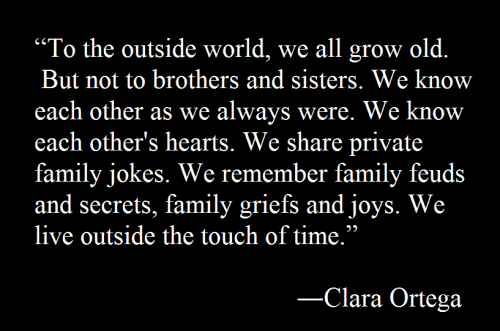
(no subject)
Date: 2013-09-29 12:54 am (UTC)I loved this story! The detail, the drama, everything! I loved the relationships between the Pevensies. They were excellent! I really enjoyed the letter correspondence. I loved Peter being protective of the thought of his sisters being forced into arranged marriages for political gain. There is so much to love in this story I can't even begin to tell you!
When I saw that I got a multi-chapter story I had planned on commenting on each chapter, but I was so sucked in. I couldn't find the strength to stop reading to write, I had to know what was going to happen next!!
So, this long, rambling, bubbling, comment can really be summed up in two words, Thank you!
You've outdone yourself! Your hard work is appreciated more than you know!!
THANKS!!! :D
(no subject)
Date: 2013-09-30 11:19 am (UTC)The major threat present was very sad, and very plausible - that there would be those opposed to the Witch who nevertheless questioned the new regime is very believable,and Lord Teucer's anguish (and end) was one of the saddest things in the novel. Lots of intersecting themes of changing perception - not easy to develop and bring together over a work of this length as effectively as this! Well done!
(no subject)
Date: 2013-10-02 01:12 am (UTC)Susan and Edmund may have been a bit disappointed in leaving the tourney but their own experiences were very rewarding and it helped to bridge the distance between them and some of their more distant subjects. I'm glad Lucy wasn't relegated to being the protected little sister; she too showed her worth and helped Peter deal with all their foreign dignitaries.
(no subject)
Date: 2013-10-02 08:40 am (UTC)I find your view of Calormen particularly interesting, and I like that the Narnians and Calormenes start off on a friendly basis despite their obvious differences -- for Calormen to be less diplomatically troublesome than Galma is not something I've seen before. On that note, I like how you've shown the cultures of all three visiting countries, and how they contrast in various ways to Narnia. The initial discomfort around non-humans was well-drawn, and I'm glad that it seemed to pass by the end of the Festival, at least among the participants; one cannot, alas, presume a similar change back in their homelands.
I liked the idea that Narnian villages are decentralized and kind of haphazard in appearance, to accomodate all kinds of Beasts and Beings. The persistent fear of the Winter's return -- that was what Old Badger was talking about in his pain-induced haze, yes? -- is a less happy bit of world-building, but equally plausible, as is the stew of guilt, resentment, and prejudice that gives rise to the Knights of Stone. Their insistance that they are fighting for Narnia's welfare, even as they drive their part of the country into ruin, is all too recognizable from our own world's history, over and over and over.
I also like that you used the Pevensies' family dynamics -- older siblings trying to protect younger ones, boys trying to protect girls -- and showed how those divisions were causing tension and robbing them of valuable advice and aid. Susan can protect herself, Edmund can fight without Peter to guard his back, and Lucy doesn't need to be shielded from the burdens of ruling. They are strongest all working together -- and that goes for Narnia in general (as illustrated by the villagers of Pebble), and also for all the countries collectively, both via trade and through exposure to different cultures and experiences. You did an excellent job of weaving that theme into all your plot threads and story levels.
(no subject)
Date: 2013-10-03 10:07 pm (UTC)(no subject)
Date: 2013-10-04 03:26 am (UTC)(no subject)
Date: 2013-10-04 06:41 am (UTC)(no subject)
Date: 2013-10-04 03:51 pm (UTC)(no subject)
Date: 2013-10-04 04:01 pm (UTC)I hadn't realized there was a main theme to the story, but I'm glad there ended up being one! I was actually sort of worried that all the different plots would feel disconnected... you have no idea how happy it makes me to know that it ended up working out. Thank you so much for your review!
(no subject)
Date: 2013-10-04 04:03 pm (UTC)